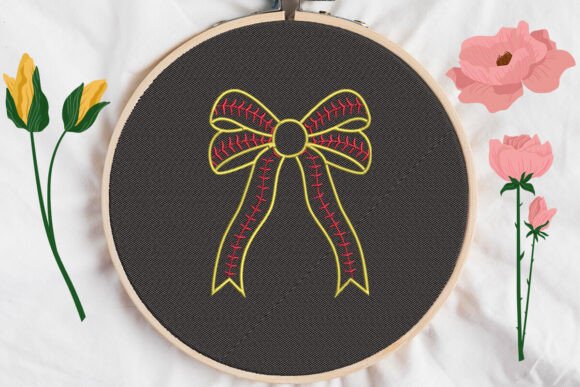
Bow Baseball Embroidery Design
First Impression: Festive, Playful, and Instantly Recognizable
As an embroidery designer who’s prepped over 200 craft fair booths—and shipped thousands of machine embroidery designs to Etsy sellers and boutique makers—I opened Bow Baseball expecting something seasonal but versatile. What I got was a smart fusion: the nostalgic charm of vintage baseball with the soft, celebratory wink of a bow. It reads as festive without being overly Christmas-specific, playful without leaning into cartoonish clutter, and polished enough to elevate even simple handmade products. Customers at a craft fair don’t pause for subtlety—they respond to clarity, contrast, and character. Bow Baseball delivers all three at a glance.
Where Bow Baseball Shines on Craft Fair Products
This design thrives where personality meets practicality. On a tote bag design, Bow Baseball works beautifully centered above the pocket or scaled slightly larger on the front panel—its rounded curves and balanced proportions prevent visual heaviness, even on canvas or linen blends. As apron embroidery, it anchors the chest pocket area with charm that feels intentional, not cutesy. For tea towel embroidery, it lands perfectly in the lower corner or mid-panel—small enough to avoid overwhelming absorbency, bold enough to catch the eye across a crowded market aisle.
Embroidered patches are where Bow Baseball truly stands out. Its clean outer shape and moderate detail translate cleanly into a sew-on or iron-on patch format—ideal for bundling as small shop products or gifting with handmade soap or candles. On pillow covers and fabric pouches, it adds just the right amount of whimsy without competing with texture or pattern. And yes—it works on caps, but only when placed thoughtfully: the front crown (not the curve of the bill) preserves legibility and avoids distortion during hooping.
Photography, Listings, and Online Appeal
If you’re an Etsy seller or digital embroidery file creator, Bow Baseball is a strong candidate for your next printable mockup bundle. Its shape photographs crisply—even on textured towels—and its balance of line and fill ensures sharpness across lighting conditions. Unlike ultra-dense monograms or script-heavy designs, Bow Baseball holds up well in thumbnail views and mobile feeds. That means better click-throughs on your listings and stronger perceived value in your design assets.
It also scales intelligently: use it large (3.5–4.2”) as a focal point on market bags or pillow covers, or shrink it to 1.8–2.3” for delicate accents on sachets, keychain tags, or mini pouches. That flexibility makes Bow Baseball a repeatable workhorse—not a one-off novelty.
Production Realities: What You Need to Know Before Hooping
While Bow Baseball looks effortless, smart production starts with testing. Here’s what I checked before committing to 50 tote bags:
- Stitch density is moderate—not low, not extreme. It runs clean on medium-weight cotton and linen, but avoid dense terry cloth unless you double-stabilize.
- The bow’s center knot and baseball stitching lines are small but legible at 2.5”. Below 2”, details begin to blur—so skip it for tiny labels or baby onesies unless you’ve verified clarity on scrap fabric.
- On dark fabric, use high-contrast thread colors—cream or white for the bow, navy or charcoal for the baseball seams. Avoid pastel-on-pastel combos; they flatten visual impact at arm’s length.
- Curved surfaces (like cap fronts or rounded pouches) require precise hooping and a cutaway + tear-away stabilizer blend. Don’t skip the test run—distortion here kills the charm.
Booth Strategy: How Bow Baseball Drives Engagement
In my booth, Bow Baseball became a conversation starter—not because it’s loud, but because it’s relatable. Shoppers paused at the embroidered apron (“My dad collected baseball cards!”), smiled at the tea towel (“Perfect for my nephew’s first tee-ball game”), and picked up the patch set to pair with denim jackets. That’s the power of layered meaning: nostalgia + celebration + handmade warmth.
It strengthened brand consistency across product types—same design, different applications—without feeling repetitive. And because it’s not tied too tightly to Christmas, it extended shelf life beyond December. Yes, it fits the Christmas category for seasonal search traffic, but its core appeal is broader: timeless, cheerful, and authentically crafted.
Designer Notes You Can’t Skip
Before turning Bow Baseball into your next handmade product or commercial embroidery offering, do these six things:
- Test the embroidery file on your exact fabric + stabilizer combo—not just muslin.
- Check thread contrast under both natural and booth-style lighting.
- Review spacing between bow loops and baseball seams—tight gaps may close up on textured towels.
- Confirm hoop size compatibility with your most-used hoops (many versions fit 4x4, but verify).
- Create at least one real-life finished product—not just a digital mockup—to assess drape, wear, and customer reaction.
- Double-check commercial licensing terms if selling physical goods. This is non-negotiable for small shop owners and Etsy sellers.
Bow Baseball isn’t just another machine embroidery design. It’s a thoughtful bridge between storytelling and stitch—functional enough for daily use, distinctive enough to stand out in a sea of samplers. When your craft fair table features Bow Baseball on a sun-bleached tote, a cozy pillow cover, and a set of hand-stitched patches, you’re not just selling embroidery—you’re inviting connection. And that’s what turns browsers into buyers.