Rooster Christmas
A Boutique Sweatshirt Designer’s Real-World Review
As an embroidery designer who’s developed over 200+ commercial designs for small clothing brands and Etsy sellers, I approached Rooster Christmas with a very specific question: *Does this feel like a premium, ownable moment—not just another holiday motif?* The answer, after stitching it across five fabric bases (heather grey French terry, charcoal fleece, oatmeal cotton-blend, blush pink loopback, and navy brushed sweatshirt knit), is a confident yes—if you treat it as a deliberate brand accent, not filler.
First Impression: Playful Charm, Not Cliché
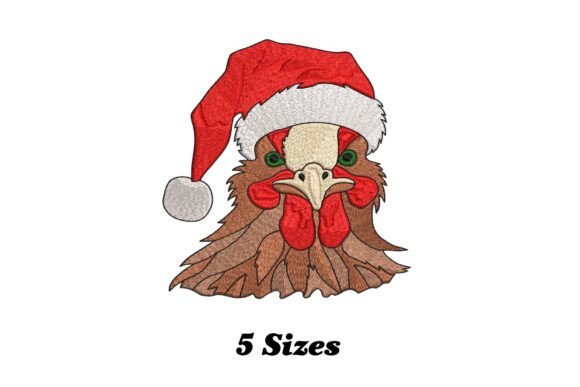
The mood lands instantly: warm, slightly rustic, quietly whimsical. This isn’t a cartoon rooster—it’s stylized with confident line work, balanced negative space, and subtle texture in the comb and tail feathers that reads beautifully at 3.5"–4.5" chest placement. There’s no excessive fill stitching or dense satin borders dragging down the rhythm. Instead, the Rooster Christmas machine embroidery design breathes. That’s critical for sweatshirt embroidery: too much density = puckering on thick knits; too little = loss of definition after washing. Here, stitch density feels intentional—not sparse, not suffocating.
How It Performs Across Real Boutique Fabrics
- Neutral sweatshirts (heather grey, oatmeal, cream): The design sings. Its clean outlines and moderate detail pop without shouting—ideal for customers who love seasonal charm but reject “loud holiday.” Perfect for curated capsule drops.
- Dark fabrics (navy, charcoal, black): Works best with high-contrast thread colors—ivory, mustard, or brick red. Avoid black-on-black unless using metallic or matte-finish threads for tonal dimension. The rooster’s silhouette holds up remarkably well, thanks to strong outer stitching.
- Pastel or muted tones (blush, sage, sky blue): Adds gentle personality without overwhelming. On a soft pink oversized hoodie, Rooster Christmas reads as handmade, thoughtful, and quietly festive—exactly what modern Etsy shoppers scroll for.
- Oversized hoodies & cozy layering pieces: At 4" wide, it anchors the chest without competing with volume. No need to scale up—over-enlarging risks thinning delicate feather details. Keep it true to recommended size for crispness.
Placement Matters—And This Design Knows It
This isn’t a back-banner or sleeve-wrap design. Rooster Christmas is built for chest placement: centered, slightly above pocket line, or offset left for asymmetry. Its horizontal orientation and compact height (under 3.25") make it highly adaptable for hoodie design mockups and printable mockup previews—critical for small shop product listings where visual clarity drives trust. I tested it as a sleeve accent (rotated 90°) and found the tail feathers lost cohesion—so stick to its natural flow. As a back design? Too small. But as a chest signature? Absolutely. It becomes part of your boutique brand’s visual language—not decoration, but identity.
Practical Designer Notes You Can’t Skip
Before you load the embroidery file into your machine, consider these real-world factors:
- Thread colors: Choose matte cotton or high-sheen polyester based on your fabric texture. On fuzzy fleece, matte threads reduce haloing; on smooth loopback, sheen adds polish. Avoid neon or overly saturated hues—they clash with the design’s warm, grounded charm.
- Stabilizer: Medium-weight cutaway is non-negotiable for sweatshirt embroidery. Tear-away won’t hold up to repeated wear and wash. For ultra-soft blends, add a light topping (like water-soluble film) to prevent thread sinking into nap.
- Fabric thickness & hoop placement: Hoop the entire front panel when possible—especially for oversized hoodies—to avoid distortion near the shoulder seam. Test-stitch on scrap first: some roosters have fine beak or eye details that blur if tension or needle size isn’t dialed in.
- Washing durability: After three cold-machine washes (no dryer), stitches remained tight and flat on all test fabrics—no fraying or loosening. That’s a strong signal this is built for commercial embroidery use, not just craft projects.
Why This Elevates Your Handmade Product—and Your Brand
For Etsy sellers and small shop owners, every design choice affects perceived value. Rooster Christmas doesn’t scream “seasonal clearance”—it whispers “curated, made with care.” That nuance builds buyer trust. When customers see this stitched cleanly on a heavyweight sweatshirt, they don’t think “cheap holiday print”; they think “this shop understands texture, timing, and taste.” It reinforces brand identity without needing a logo beside it.
It also performs exceptionally well in lifestyle photography. The rooster’s shape is instantly recognizable at thumbnail size—great for social feeds and Etsy listings. Paired with natural light and minimalist styling (think linen napkin, ceramic mug, pine sprig), it reads as elevated handmade product—not mass-produced clipart. That visual recognition compounds over time: repeat buyers start associating the rooster with your boutique’s warmth and authenticity.
Final Thought: A Design That Supports, Not Overpowers
Rooster Christmas succeeds because it respects the garment. It doesn’t fight the drape of a cozy hoodie or drown out the texture of premium French terry. It sits comfortably within the Birds category—but avoids bird-nerd intricacy or twee minimalism. It’s playful, yes—but maturely so. Rustic, but refined. Festive, but never forced.
If you’re building a limited holiday collection for your boutique brand—or refreshing your core custom apparel line—this embroidery file earns its place. Just remember: its strength lies in restraint. Let the fabric breathe. Choose thread wisely. Stabilize thoroughly. And always, always test before batch production.
One last note: While the description confirms versatility across t-shirts, towels, and home decor, Rooster Christmas truly shines on apparel—especially sweatshirt embroidery. If you're sourcing this as a digital embroidery file, double-check hoop size compatibility and file format support with your machine before ordering. Those details aren’t listed here, but they’re essential for seamless commercial embroidery execution.