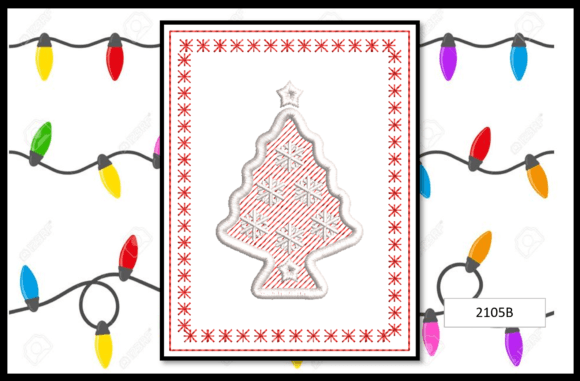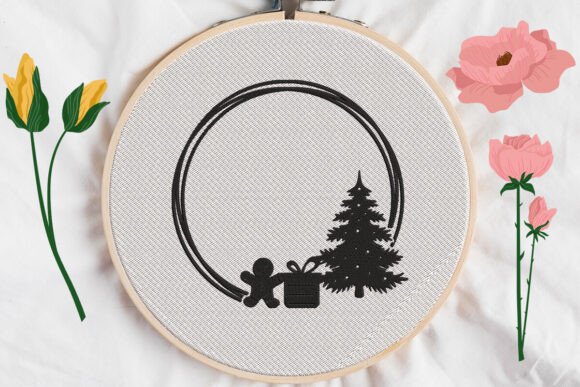
Happy Holidays Christmas Tree
A Festive, Flexible Anchor for Your Holiday Collection
As an embroidery designer who’s built dozens of seasonal product lines for Etsy sellers, craft fairs, and small-batch apparel brands, I approach every new holiday embroidery file with two questions: *Does it spark joy at first glance?* and *Will it stitch cleanly across ten different fabric types and use cases?* The Happy Holidays Christmas Tree design passes both tests — immediately. Its mood is warmly festive, gently elegant, and quietly confident — not overly cute, not starkly modern, not nostalgic to the point of kitsch. It lands in that sweet spot: cozy enough for a handmade gift, refined enough for a premium pillow cover, and legible enough for a social media thumbnail.
Real-World Versatility: Where This Design Shines
This isn’t just a tree + text combo — it’s a strategic seasonal asset. On sweatshirt embroidery, the balanced proportions hold up beautifully on chest placements and sleeve accents. For tote bag design, it reads clearly even at 4–5 inches wide — no squinting required. With kitchen towel embroidery, the clean lines prevent thread buildup in high-wash zones, and the moderate stitch density keeps towels soft and absorbent. As a pillow cover centerpiece, it adds instant holiday warmth without overwhelming the fabric. And yes — it works on baby onesies (scaled down), aprons, table linens, and even as a standalone embroidered patch for gift-ready packaging or layered apparel.
For Etsy sellers building curated bundles — think “Holiday Hostess Set” (towel + apron + oven mitt) or “Family Matching Sweatshirt Pack” — the Happy Holidays Christmas Tree delivers visual consistency without monotony. Its simplicity allows color variation to carry emotional nuance: forest green thread for tradition, blush pink for modern femininity, gold metallic (used sparingly) for luxe gifting. In craft fair displays, it photographs crisply under natural light — critical when shoppers scroll past your booth in under three seconds.
Where to Use It Thoughtfully — Not Everywhere
Like any strong seasonal embroidery piece, the Happy Holidays Christmas Tree has boundaries. Avoid using it full-size on curved surfaces like baseball caps — the text can distort unless digitized specifically for that application. On thick, textured fabrics like heavy terry cloth or quilted oven mitts, confirm the stitch density won’t cause puckering; a lightweight tear-away stabilizer often helps more than heavy cut-away here. Dark fabric demands careful thread colors testing — white or cream may lack contrast, while bright red or gold can pop beautifully if balanced against background tone.
Small hoop sizes (under 4x4 inches) require scaling down — but watch the lettering. “Happy Holidays” must remain legible at 3 inches wide. If your machine struggles with fine text clarity, consider offering a simplified version (tree only) as a companion design. Also, avoid dense metallic threads on stretchy garments like ribbed knits — they crack and shed with wear. And remember: repeated washing weakens any embroidery over time. Reinforce high-use items (like kitchen towels) with proper backing and recommend gentle cycles in care tags.
Emotional & Commercial Impact During Peak Season
Holiday shoppers don’t just buy products — they buy feelings: warmth, belonging, nostalgia, generosity. The Happy Holidays Christmas Tree taps into that instinctively. It feels inclusive (“Happy Holidays,” not narrowly themed), timeless (no dated trends), and trustworthy (clean execution signals quality). That builds customer trust — especially for first-time buyers browsing your small shop product lineup. Visually, it creates instant visual recognition: repeat customers will spot your brand’s take on this classic motif across listings, social posts, and packaging.
It also lifts perceived product value. A plain sweatshirt becomes a personalized gift with this embroidery. A basic cotton tote transforms into a memorable handmade gift. That emotional resonance directly supports higher price points and better conversion rates — especially when paired with cohesive mockups showing the design on multiple items.
Practical Designer Notes Before You Stitch
- Test thread colors on both light and dark fabric — especially for the “Happy Holidays” text. What reads well on ivory linen may vanish on navy twill.
- Check stitch density before bulk production. High density = sharper detail but stiffer fabric; low density = softer drape but potential gaps in fill areas.
- Confirm hoop size compatibility with your target products. If you’re embroidering on petite baby blankets or narrow apron straps, verify the design fits your smallest hoop without compromising legibility.
- Use proper stabilizer for each fabric texture — cut-away for knits, tear-away for stable wovens, fusible for lightweight silks or linens.
- Create realistic mockups — not just flat PNGs. Show the Happy Holidays Christmas Tree stitched on a draped pillow cover, folded towel edge, or slightly rumpled sweatshirt. Buyers imagine ownership faster.
- Review small details after stitching — especially where branches meet the trunk or letters intersect. Tiny loops or stray jumps can snag or fray.
- Plan matching color palettes across your collection. If your holiday line uses sage, terracotta, and cream, ensure thread options support that harmony.
- Confirm commercial licensing before selling finished seasonal products. This digital embroidery file must be cleared for commercial embroidery use — don’t assume “personal use only” files are safe for your Etsy shop.
Final Thought: A Reliable, Joyful Workhorse
The Happy Holidays Christmas Tree isn’t flashy — and that’s its strength. In a market flooded with overdesigned, trend-chasing holiday embroidery, this machine embroidery design stands out by doing exactly what it promises: delivering festive cheer, cleanly and consistently. It’s the kind of holiday embroidery that sells year after year because it feels both special and sincere. Whether you’re prepping for your first holiday drop or refining a decade-old collection, this design earns its place — not as a novelty, but as a trusted foundation.