Funny Duck Christmas
First Impression: Playful, Festive, and Instantly Memorable
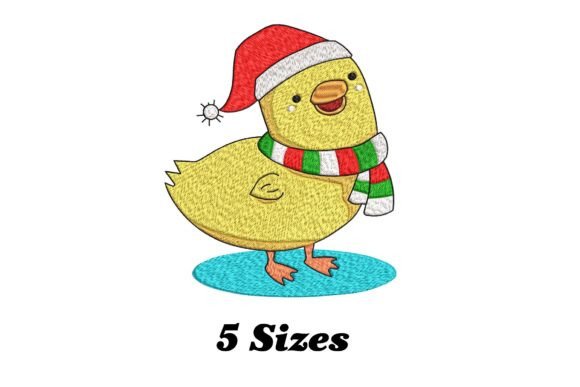
As an embroidery designer who’s prepped over 200 craft fair booths—and shipped thousands of finished products—I opened Funny Duck Christmas expecting charm, not cliché. What landed was exactly that: a lighthearted, confident holiday motif with clear personality. It doesn’t lean into rustic minimalism or glittery elegance—it leans into fun. That’s gold at a handmade market. Shoppers pause for whimsy, especially when it’s wrapped in seasonal warmth. “Funny Duck Christmas” signals approachability, nostalgia, and gentle humor—traits that convert fast on aprons, totes, and tea towels where buyers want to smile *before* they buy.
Where It Shines: Craft Fair-Ready Product Pairings
This design thrives as a small-shop product with high visual return. On a woven cotton tote bag? Perfect center-chest placement reads clearly from six feet away—no squinting needed. As apron embroidery above the pocket? It adds character without overwhelming utility. For tea towel embroidery, position it near the top hem—it stays legible even when folded over a counter edge. And as an embroidered patch? Extremely strong. Its outline and core shape hold up beautifully when heat-applied or sewn onto denim jackets or market bags.
It also works surprisingly well on curved surfaces—like structured caps—provided you use a medium-density stabilizer and avoid ultra-fine beak or eye details (more on that below). Pillow covers and fabric pouches benefit most from its balanced proportions: neither too tall nor too wide, it anchors the surface without shrinking the background fabric’s presence.
What Makes It Sell Online—and In-Person
Funny Duck Christmas is a natural fit for Etsy seller listings because it photographs cleanly. The duck’s silhouette reads well against both light and mid-tone fabrics, and its implied motion (a waddle? a wink?) invites engagement in product photos. When used in a printable mockup, it avoids looking “clip-art.” Instead, it feels hand-chosen—like part of a curated collection of handmade product assets.
For booth display, I recommend stitching it on three contrasting items side-by-side: a natural linen tea towel, a charcoal organic cotton tote, and a cream twill cap. That triad shows versatility without confusion—and proves this isn’t just another generic holiday file. Buyers remember contrast. They remember consistency. And they remember ducks wearing tiny Santa hats (even if implied).
Production Reality Check: Stitch Density & Detail Awareness
Before batch production, treat Funny Duck Christmas like any machine embroidery design with personality: test it. Run a sample on scrap fabric matching your intended base—especially if using textured terry cloth, heavy canvas, or dark-thread-on-dark-fabric combos. Look closely at:
- Dense stitch areas: If the duck’s body or scarf uses satin fill, confirm it doesn’t pucker on lightweight knits or stretchy pajama sets.
- Tiny details: Avoid shrinking this below 3 inches wide unless you’ve verified clarity on thread-heavy stabilizer. Small eyes or feather lines may vanish on tea towels with coarse weave.
- Fabric texture: On looped terry or thick quilting cotton, reduce stitch density slightly—or switch to a lighter underlay. Otherwise, the duck risks looking stiff instead of cheerful.
- Curved surfaces: Caps and pouches demand precise hooping. Use a cap frame and baste first. If the original embroidery file includes jump stitches near the beak or wingtip, edit them out—they’ll snag on seams.
Design Assets That Build Brand Trust
When customers see Funny Duck Christmas repeated across your line—on a pillow cover, a market bag, and a set of oven mitts—they subconsciously register cohesion. That’s brand consistency built through smart design assets, not logos. This design supports that because it’s scalable, expressive, and seasonally anchored without feeling dated. It also pairs effortlessly with supporting motifs: simple holly sprigs, minimalist snowflakes, or even coordinating “Quackmas” text files—just ensure all share similar stitch weight and spacing.
That said, don’t force it everywhere. It loses impact on oversized sweatshirts or baby onesies under 4 months. Stick to products where the duck reads as intentional—not incidental.
Pro Designer Notes Before You Stitch
Here’s what I do before cutting my first production run:
- Test on scrap fabric—same type, same color, same wash history as your final goods.
- Check thread contrast: Does the duck pop on oatmeal linen? Does white thread disappear on ivory terry? Swap to ecru or heather gray if needed.
- Review spacing: Ensure no elements bleed into seam allowances—especially on pouches and pillow covers.
- Confirm hoop size: If it’s larger than 5×7”, verify your machine handles it smoothly. Some duck poses require wider clearance.
- Inspect stitch density: High-density fills can overwhelm delicate fabrics. Adjust underlay or reduce fill angle if puckering occurs.
- Use the right stabilizer: Tear-away for stable wovens; cut-away for knits; fusible + tear-away for towels.
- Create at least one real mockup—not digital. Hang it at booth height. See how light hits the stitches at 10 a.m. versus 3 p.m.
- Compare fabric colors in natural light—not just screen light. A “mint” thread may read sage on linen but neon on polyester.
- Confirm commercial licensing before selling finished products. This is non-negotiable for any digital embroidery file used in commercial embroidery.
Final Thought: A Holiday Anchor With Personality
Funny Duck Christmas isn’t just another Christmas design—it’s a conversation starter, a booth magnet, and a repeat-purchase trigger for customers who love handmade joy with zero pretense. It balances simplicity and storytelling, function and flair. When stitched thoughtfully on the right craft fair product, it lifts your entire table. Not because it’s flashy—but because it feels human, holiday-hearted, and quietly confident. That’s the kind of embroidery that sells out by Sunday afternoon.