Flat Bottom Snowy
First Impression: Festive, Friendly, and Booth-Ready
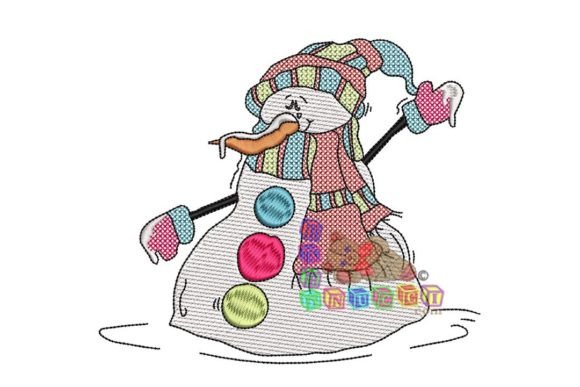
As an embroidery designer who’s prepped over 200 craft fair booths in the past decade, my first glance at Flat Bottom Snowy tells me this is a confident, crowd-pleasing Christmas design—not overly cutesy, not starkly minimalist, but warmly festive with clear visual balance. The name itself hints at stability (“flat bottom”) and seasonal charm (“snowy”), which translates instantly to shoppers scanning a crowded market table. It feels approachable for all ages, fits farmhouse kitchens and modern boutiques alike, and carries that quiet handmade quality customers pay a premium for.
Where Flat Bottom Snowy Shines on Craft Fair Products
This design doesn’t just sit nicely—it performs. On a natural cotton tote bag? Instant charm: centered above the pocket or scaled slightly larger on the front panel, it reads clearly from six feet away. As an apron embroidery? Perfectly balanced below the bib or on the lower left corner—its grounded silhouette complements the wearer’s movement without overwhelming the garment. For tea towel embroidery, Flat Bottom Snowy lands beautifully in the lower third, leaving room for hand-stitched hems and artisanal labeling.
It also scales smartly. As a small embroidered patch (2.5”–3”), it holds detail without crowding—ideal for pinning onto gift tags, stitching onto denim jackets, or bundling as holiday mini-gifts. On pillow covers and fabric pouches, its horizontal emphasis creates rhythm across a display. And yes—it works on caps, but only if placed thoughtfully: center-front on structured, medium-crown caps (not curved low-profiles) where stitch density won’t buckle the fabric.
What Makes Flat Bottom Snowy Sell Online and In-Person
Flat Bottom Snowy is inherently “photogenic.” Its clean outlines, balanced negative space, and implied texture (think scarf folds, coal-button eyes, carrot nose) translate well in printable mockups and Etsy listings—even on mobile screens. Unlike overly intricate snowmen with tiny mittens or glitter-thread effects, this design avoids visual noise. That means faster buyer recognition, higher click-through on digital ads, and stronger booth recall when paired with cohesive packaging (kraft tags, twine, red-and-cream tissue).
For batch production, it’s repeatable. No nested elements, no micro-details that vanish after five pieces. You can confidently run 20+ tea towels or 30 tote bags without re-hooping mid-run—provided you’ve verified hoop size compatibility and stabilizer choice. And because it’s not tied to one trend (no puns, no pop-culture references), it stays fresh across multiple holiday seasons. That’s gold for small shop owners building a library of commercial embroidery assets.
Careful-Use Notes Every Embroidery Designer Should Check
- Dense stitch areas: If the scarf or base snowball uses fill stitches, test on textured towels—high-pile terrycloth may mute definition. Opt for lighter fill density or switch to satin stitch borders for clarity.
- Tiny details: Avoid shrinking Flat Bottom Snowy below 2.25” wide unless the file explicitly supports fine detail. Coal eyes or twig arms may blur on dark fabric or coarse weaves.
- Curved surfaces: Caps and pouches demand careful hooping. Use cutaway + tear-away stabilizer combo and reduce top tension slightly to prevent puckering.
- Fabric texture matters: On heavy canvas market bags or thick quilted pillow covers, confirm thread colors have enough contrast—cream-on-ivory won’t pop under fair lighting.
Design Strengths That Boost Your Brand & Booth
Flat Bottom Snowy strengthens your perceived craftsmanship—not because it’s complex, but because it’s intentional. Its flat-bottom stance signals stability and care; its snowy simplicity invites warmth, not clutter. When grouped with other holiday designs, it anchors a display without competing. Pair it with neutral linens and matte-finish packaging, and it elevates your entire small shop product line.
Customers engage more deeply with designs that feel both nostalgic and current—and Flat Bottom Snowy delivers that duality. At a craft fair, it draws smiles, prompts “Oh, I need that for my kitchen!” comments, and converts fast. On Etsy, it pairs seamlessly with “handmade Christmas,” “embroidered kitchen gift,” and “machine embroidery design” search terms—especially when listed alongside real-life photos (not just vector previews).
Essential Embroidery Designer Prep Steps
- Test on scrap fabric matching your final product—same weight, weave, and dye lot.
- Check thread contrast under both daylight and warm booth lighting.
- Review spacing between elements—does the scarf sit cleanly above the snowball? Are button gaps readable?
- Confirm hoop size compatibility before cutting dozens of fabric pieces.
- Inspect stitch density—if fill areas exceed 18,000 stitches, adjust for delicate fabrics.
- Use the right stabilizer: Cutaway for knits (t-shirts, sweatshirts), tear-away for stable wovens (towels, totes).
- Create at least one real mockup—a finished tea towel or patched pouch shows buyers exactly what they’re buying.
- Compare fabric colors side-by-side—ivory, oat, and natural linen behave differently under thread.
- Confirm commercial licensing before selling finished products—this is non-negotiable for Etsy sellers and wholesale partners.
Final Thought: A Reliable Workhorse for Holiday Season Sales
Flat Bottom Snowy isn’t flashy—but it’s dependable, versatile, and quietly persuasive. It’s the kind of machine embroidery design that sells while you’re chatting with another customer, that earns repeat orders from local boutiques, and that builds trust with buyers who value consistency and care. Whether you’re launching your first Etsy shop or restocking your craft fair booth for the fifth year, this embroidery file earns its spot in your core holiday collection. Just remember: great design starts with testing, not assuming. Run that sample. Refine that stabilizer. Then watch Flat Bottom Snowy do what it does best—bring calm, cheer, and steady sales to your handmade business.