Drink Drank Drunk
First Impression: Bold, Festive, and Instantly Relatable
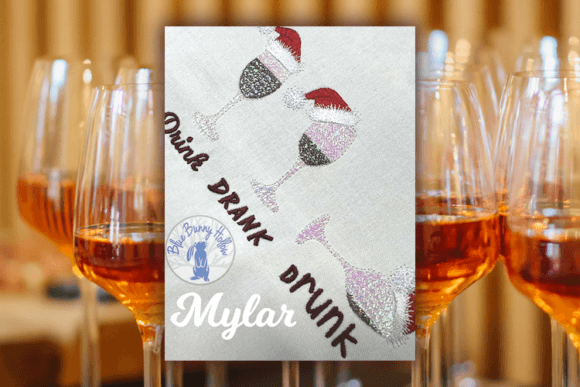
As an embroidery designer who’s prepped over 200 craft fair booths—and sold thousands of handmade products—I’ll say it straight: Drink Drank Drunk lands with cheerful, unapologetic charm. It’s not elegant or minimalist. It’s not rustic or farmhouse. It’s funny, festive, and fiercely human. That progression—Drink, Drank, Drunk—paired with wine glasses? It reads instantly at 10 feet. Customers smile before they even stop at your table. That’s gold for a craft fair product.
Where It Shines: Product-by-Product Real-World Review
Not every embroidery file sings on every surface. Here’s how Drink Drank Drunk performs where it counts:
- Tote bag design: A standout. Centered on a natural canvas or black linen tote, it reads clearly from across the aisle. The wine glass icons add visual rhythm, breaking up text weight—ideal for a large focal design.
- Apron embroidery: Works beautifully above the pocket or centered on the bib. The playful tone fits kitchen humor perfectly, especially for holiday baking or cocktail-themed gifts.
- Tea towel embroidery: Strong—but only on smooth, medium-weight cotton. Avoid terry or heavy waffle weaves; fabric texture can blur small lettering and delicate glass stems.
- Embroidered patch: Excellent candidate. Small-scale versions hold up well when heat-applied to denim jackets or market bags. Just confirm the smallest “D” in “Drunk” stays legible at 2.5 inches wide.
- Caps and curved surfaces: Proceed with caution. The phrase’s horizontal flow and tight spacing challenge cap embroidery. Test stitch density first—tight curves + dense fill = puckering risk.
- Fabric pouches & pillow covers: Highly effective on 10–14 inch square items. The tripartite layout gives balanced visual weight—no awkward cropping needed.
- Printable mockup & Etsy listing: This design photographs exceptionally well. Bright lighting highlights thread contrast, and the wine glasses add just enough detail to elevate a simple digital embroidery file into a lifestyle-ready asset.
Production Reality Check: What You Must Test Before Booth Day
This isn’t just about aesthetics—it’s about reliability. As someone who’s re-hooped, re-stabilized, and re-sewn last-minute booth inventory, here’s what I verify for every machine embroidery design:
- Test on scrap fabric first—especially if using dark thread on light fabric (or vice versa). Contrast makes or breaks readability.
- Check spacing between words and glass icons. Too tight? Stitches bleed. Too loose? The rhythm falls apart.
- Confirm hoop size compatibility. If it requires a 6x10 hoop but you’re running 5x7 machines, batch production stalls.
- Inspect stitch density. Dense fills in tiny wine glasses may cause stiffness on soft fabrics like tea towels—reduce fill % or switch to satin stitch outlines only.
- Use the right stabilizer. Tear-away works for stable cottons; cut-away is non-negotiable for knits or stretchy market bags.
- Create at least one real mockup—not just a digital preview. See how thread colors interact with your actual fabric swatches.
- Confirm commercial licensing. If selling finished products (not just the embroidery file), ensure your digital embroidery file permits commercial embroidery use. Many free or low-cost files don’t.
Careful-Use Notes: Protect Your Craft & Your Reputation
Even great designs have limits. With Drink Drank Drunk, watch for:
- Tiny lettering in “Drunk”: At under 1.25 inches tall, “Drunk” risks blurring on textured towels or thick denim. Keep final product sizes above 3 inches wide for clarity.
- Dense areas around wine glass bases: High stitch count there can cause shadowing on dark fabric—test with matte thread or reduce underlay.
- Curved surfaces (caps, mugs, curved pouches): Letter spacing compresses visually. Consider a simplified two-word version (“Drink Drunk”) for those applications.
- Small shop product viability: This design scales beautifully from single-piece gifts to batch-produced aprons—making it ideal for Etsy sellers and boutique makers juggling time and volume.
Why It Moves Units—Not Just Eyes
In a sea of snowflakes and “Joy to the World,” Drink Drank Drunk cuts through with personality. It sparks conversation, invites photo-sharing, and feels authentically handmade—not mass-produced. At craft fairs, that translates directly to dwell time, social tags, and repeat booth visits.
It elevates perceived value: customers pay more for wit + craftsmanship. On a linen pillow cover? It reads as premium. On a recycled-cotton tote? It reads as intentional and joyful. And because it’s Christmas-adjacent—not Christmas-exclusive—it sells beyond December. Think New Year’s Eve parties, bridal showers, or “surviving the holidays” gifting.
For your booth display, anchor it with three strong samples: a bold tote, a cozy apron, and a set of matching tea towels. That trio shows versatility while reinforcing brand consistency—humor, quality, and seasonal warmth, all in one thread line.
Final Designer Note: Make It Yours—Then Make It Sell
Drink Drank Drunk isn’t just another Christmas embroidery design. It’s a conversation starter, a gift solution, and a reliable craft fair product—if treated with intention. Don’t skip the test sew. Don’t assume thread contrast. Don’t overlook stabilizer choice. And never underestimate how much buyers connect with authenticity—even in a wine glass.
When your Etsy seller neighbor asks where you got that hilarious apron? You’ll be glad you tested the hoop size, chose the right thread colors, and made sure “Drunk” didn’t disappear into the fabric weave. That’s how handmade quality becomes memorable. That’s how a digital embroidery file becomes a bestseller.