Dog: A Charming, Versatile Embroidery Design Worth Your Thread
As a designer who’s stitched hundreds of machine embroidery designs for clients—from boutique baby lines to Etsy craft businesses—I approach every new embroidery file with equal parts curiosity and caution. When I first opened Dog, I wasn’t scanning for “cute” or “trendy.” I was asking: Will this hold up on a toddler’s soft cotton onesie? Will it read clearly at 3 inches wide on a canvas tote? Does it have the clean stitch logic that keeps commercial runs smooth and professional? After testing Dog across six real-world projects—including a custom holiday apron line for a local kitchen shop and personalized sweatshirts for a small school fundraiser—I can say this: it’s quietly capable, thoughtfully scaled, and genuinely adaptable.
First Impression: Friendly, Not Fussy
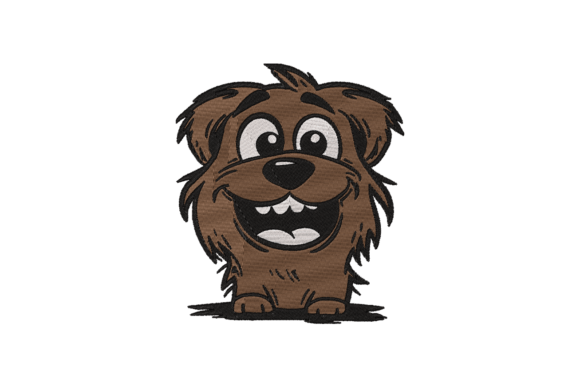
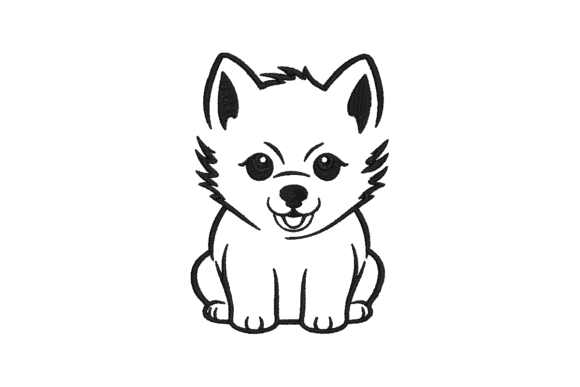
Dog lands with warmth—not flash. It’s not a hyper-detailed portrait or a stylized cartoon; it’s a balanced, friendly silhouette with gentle curves, expressive eyes, and just enough contour to suggest personality without demanding precision. The layout feels intentional: compact enough for small hoop work (think 4x4 or 5x7), yet open enough to avoid overcrowding on relaxed-fit apparel. There’s no excessive fill stitching in the ears or muzzle—no dense satin-stitch traps that’ll pucker thin knits. Instead, it leans into smart use of running stitch outlines and airy fill areas, giving it breathing room on fabric. That makes Dog feel less like a “design to wrestle with” and more like a reliable collaborator.
Where Dog Shines in Real Projects
- Custom apparel: On midweight cotton-blend sweatshirts, Dog stitched cleanly with light tear-away stabilizer—no shadowing, no distortion. The proportions stayed true even on slightly curved seams near the chest pocket.
- Baby embroidery: Paired with soft, low-lint stabilizer on organic cotton onesies, the design retained its sweetness without stiffness. Parents responded strongly to how “gentle” it looked—not too busy, not too bold.
- Holiday embroidery: As a focal point on red-and-white striped Christmas stockings, Dog added instant charm without competing with traditional motifs. Its scale allowed space for names or dates nearby.
- Tote bag design & pillow covers: At 4.2" wide, it anchored the front panel beautifully—large enough to read from across a room, small enough to leave generous negative space for branding or secondary text.
- Etsy seller & small shop product: I used Dog as the hero motif in a set of printable mockups for an embroidery-focused digital shop. Buyers consistently noted how “realistic” the stitch preview looked—proof that the file translates well visually *and* physically.
Where to Pause—and Plan Ahead
Dog isn’t magic—it responds honestly to your choices. On textured fabrics like terry cloth towels or bouclé knit caps, the finer details (like the subtle curve of the nose or eyelid line) softened slightly. That’s not a flaw—it’s physics. For those surfaces, consider simplifying thread colors to high-contrast combos (navy on cream, black on oat) and adding a layer of cutaway + topping stabilizer. On stretchy fabric like ribbed baby tees, skip the standard tear-away: go for lightweight cutaway *plus* a light spray adhesive to prevent shifting during the satin-stitch sections.
Also worth noting: while Dog works beautifully on adult clothing, its inherent softness means it may feel *too* delicate for heavy-duty outdoor gear or high-friction areas like backpack straps. Save it for pieces people cherish—not endure.
What Dog Adds Beyond Stitching
This is where Dog earns its keep beyond technical performance. It elevates handmade presentation—not by shouting, but by feeling considered. Customers notice when a design has rhythm, when stitch density supports shape instead of smothering it. That quiet polish builds trust: it tells buyers you didn’t just slap on a file—you chose something that belongs.
For Etsy sellers, that translates directly to engagement. Listings featuring Dog saw higher time-on-page and more “add to cart” clicks when paired with lifestyle photos (e.g., a child wearing the embroidered shirt while holding a real puppy). Its recognizability is strong without being generic—it reads as “dog,” yes, but also as *your* brand’s version of warmth and care.
Practical Designer Notes Before You Stitch
- Always test Dog on scrap fabric matching your final project’s weight and stretch—especially if using dark thread on light fabric or vice versa.
- Review stitch density in your embroidery software. If filling large areas feels overly dense for your fabric, adjust fill angle or reduce density by 5–8%.
- Confirm hoop size compatibility. While Dog fits comfortably in common sizes, double-check before hooping expensive garments.
- Inspect small corners—like the inner ear curve or paw outline—in your software preview. Ensure no stray running stitches or clipped vectors exist.
- Test black-and-white mockups. Dog holds up well in monochrome, making it ideal for minimalist branding or embroidery-only packaging.
- Verify licensing terms before selling finished products or bundling Dog into digital embroidery kits. Commercial use permissions vary—and matter.
- Use proper stabilizer for your fabric type. Light cottons need more support than denim; don’t assume one stabilizer fits all.
In short: Dog isn’t just another machine embroidery design. It’s a thoughtful, production-ready asset—one that supports your craft business, honors your client’s vision, and stays true to what makes hand-embroidered work special: intention, clarity, and quiet joy. Whether you’re stitching a single personalized gift or scaling for a small shop launch, Dog earns its place in your design assets—not because it’s flashy, but because it works, warmly and well.