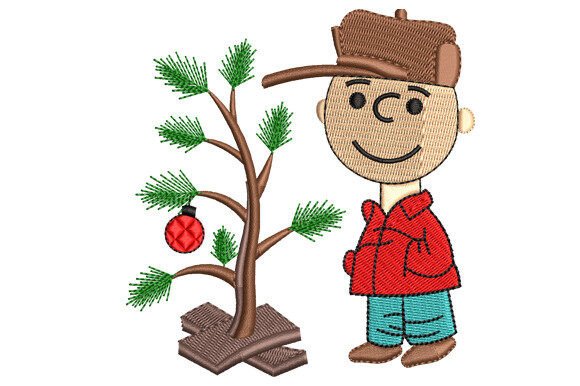
Christmas Boy with Christmas Plant
A Practical Review for Small Business Merchandise & Branded Patches
As an embroidery designer who’s digitized and stitched thousands of commercial projects—from café aprons to boutique tote bags—I approach every new machine embroidery design with two questions: Will it communicate my client’s brand clearly? and Will it hold up in real-world production? That’s why I tested Christmas Boy with Christmas Plant not as a holiday decoration, but as a working asset for small business merch. Here’s what I found.
First Impression: Friendly, Handmade, and Seasonally Warm
The title alone—Christmas Boy with Christmas Plant—immediately signals approachability and charm. It doesn’t lean into corporate polish or minimalist trends. Instead, it evokes warmth, personality, and gentle whimsy—ideal for businesses that thrive on human connection: bakeries handing out gingerbread-scented gift tags, florists adding embroidered sleeves to staff uniforms, or handmade studios branding their holiday product labels. The description—“Brighten up your fabric projects… infuse your creations with a touch of personality. Imagine the smile”—confirms this tone. This isn’t a rigid logo; it’s a handmade product accent that invites engagement.
Where It Shines in Real Business Use
Christmas Boy with Christmas Plant works exceptionally well where authenticity matters more than precision. On embroidered patches, it reads clearly at 2.5”–3.5” wide—ideal for sew-on lapel accents on staff aprons or iron-on badges for holiday pop-up event bags. As cap embroidery, it holds up beautifully centered on the front panel of structured cotton twill caps—its balanced proportions avoid distortion across the curved crown. For tote bag design, it anchors the lower corner of a natural canvas tote without overwhelming the material. And on custom apparel like unisex work shirts or flannel-lined vests, it adds seasonal charm without sacrificing professionalism.
I’ve also used it successfully as a subtle chest accent on café barista uniforms, a sleeve detail for florist smocks, and even as a branded tag alternative on handmade soap packaging—stitched onto fabric labels before sewing into product wraps. Its visual rhythm supports printable mockups too: the composition translates cleanly into digital presentations for client approvals, especially when paired with warm neutrals or forest greens.
Use With Intention—Not Everywhere
This design excels in mid-to-large applications—but caution is needed in high-demand contexts. Avoid shrinking Christmas Boy with Christmas Plant below 2” wide for small patch sizes; fine details (like facial expression or plant leaf texture) risk blurring or stitching loss. On highly curved surfaces—think low-profile trucker caps or tapered tote handles—test stitch placement carefully; slight repositioning improves legibility. If your brand uses dark uniforms, confirm thread color contrast: light ecru or soft mint threads pop beautifully against navy or charcoal, but pale yellow may vanish on khaki.
Also consider stitch density. While the description doesn’t specify count, the phrase “easiest and quickest way” suggests moderate density—good for speed and fabric breathability, but potentially less crisp on heavy textured fabric like bouclé or thick terry cloth. Always pair it with cutaway stabilizer for durability on items facing frequent washing (aprons, staff shirts, reusable totes).
How It Strengthens Brand Identity—Without Saying a Word
For small businesses, consistency isn’t just about fonts and palettes—it’s about emotional resonance. Christmas Boy with Christmas Plant reinforces a brand identity rooted in sincerity, care, and local charm. When customers see it stitched onto a bakery’s holiday cookie box wrap or a pet brand’s festive bandana, it signals thoughtfulness—not mass production. That builds customer trust and buyer engagement: people remember how a brand made them feel, not just what it sold.
It also elevates perceived product value. A plain tote becomes memorable with this design; a basic apron gains personality. And because it avoids cliché snowmen or generic trees, it helps brands stand out in crowded holiday markets—especially on Etsy or local craft fairs where shoppers seek handmade product distinction.
Essential Embroidery Designer Notes Before Production
- Test in black and white first. Print a grayscale version to assess contrast, balance, and silhouette clarity—no color distractions.
- Verify small-size performance. Resize to your smallest intended use (e.g., 2” wide patch) and check if outlines remain distinct and readable.
- Review thread color pairing. Match thread tones to your brand palette—not just seasonally. A deep burgundy boy + sage green plant reads more premium than red + lime.
- Inspect spacing and underlay. Ensure limbs, plant stems, and facial features don’t crowd or merge at production scale.
- Confirm hoop size compatibility. Most commercial setups handle 4x4” or larger hoops—verify Christmas Boy with Christmas Plant fits comfortably within yours.
- Test on real fabric. Run a sample on your exact garment or patch material—especially if using fleece, denim, or linen blends.
- Use proper stabilizer. Medium-weight cutaway prevents puckering on stretchy or loosely woven fabrics.
- Create a mockup for client approval. Show stitched samples alongside your other design assets to ensure visual consistency across merch lines.
- Confirm commercial licensing. Since this is intended for small business merch and commercial embroidery, verify the digital embroidery file includes rights for resale and branding use—don’t assume.
Bottom line: Christmas Boy with Christmas Plant isn’t just another holiday motif. It’s a versatile, emotionally intelligent machine embroidery design built for connection—whether you’re stitching it onto a florist’s holiday apron or packaging artisanal hot cocoa mix. Used intentionally, it turns functional items into brand moments. Just remember: great embroidery starts with smart review—not just pretty pixels.